EU sanctions lead to Russian chess president’s suspension, Anand takes interim role

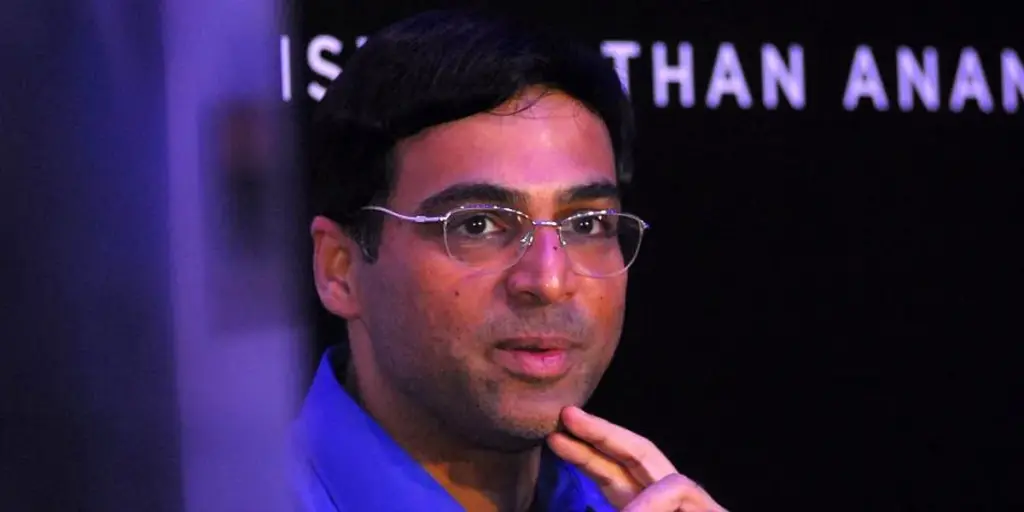
International Chess Federation leadership change
Arkady Dvorkovich, the president of the International Chess Federation (FIDE), announced on Friday that he is suspending his activities with the organisation. This decision follows his inclusion on the European Union’s (EU) list of sanctioned Russian individuals. Dvorkovich, who previously served as a Russian deputy prime minister, described the designation as “unlawful and unfair” and stated his intention to challenge it.
As a result of Dvorkovich’s suspension, Viswanathan Anand, an Indian world chess champion, will assume the role of FIDE’s interim president. Anand has been the Deputy President of FIDE since 2022. The FIDE Council accepted and ratified Dvorkovich’s decision to suspend his duties. According to article 19.2 of the FIDE Charter, Anand will act as interim president as long as Dvorkovich is subject to restrictive measures under EU and Swiss laws and regulations.
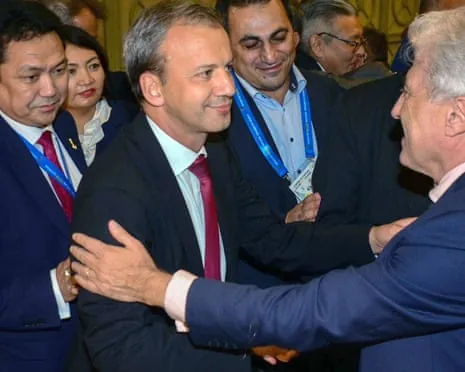
Dvorkovich expressed confidence that justice would prevail regarding his challenge to the sanctions. However, he noted that the sanctions could hinder the stable functioning of FIDE until a formal court decision is reached or the decision is cancelled or amended. Therefore, he voluntarily suspended his powers and duties as FIDE President with immediate effect.
EU’s extensive sanctions package
The inclusion of Dvorkovich in the sanctions list is part of the EU’s largest sanctions package against Russia in four years. This comprehensive package targets 218 individuals and entities. Kaja Kallas, the EU foreign policy chief, confirmed that the measures affect more than 100 banks and cryptocurrency operators. Additionally, over 40 vessels from Russia’s so-called shadow fleet and several oil refineries are also targeted.
The new package adds more than 50 military-industrial entities to the sanctions list, specifically including key actors involved in producing Russia’s long-range drones. The Russian oil price cap has been frozen at $44.10 per barrel for 12 months, preventing an automatic increase that would have raised it to approximately $58.50.
These new listings bring the total number of designations to nearly 3,000. A full asset-freeze has been imposed on 94 Russian financial institutions, most of which are banks. Furthermore, 33 Russian banks have been disconnected from the Swift international payments system. The Moscow stock exchange has also been added to the sanctions list.
Internationally, banks and cryptocurrency platforms in various countries, including Mongolia, Kyrgyzstan, India, Georgia, Panama, the Marshall Islands, Belarus, the United Arab Emirates, and countries in Africa, have been affected by these measures. The package also targets entities linked to Russia’s satellite communications system, which is being developed as an alternative to Starlink.
There are 56 entities and persons added to the sanctions list for their involvement in Russia’s military industrial complex, with most linked to long-range Garpiya drones. Additionally, 51 entities have been added to a list of companies facing export restrictions on dual-use goods and technology. Some of these entities are located in third countries such as China, including Hong Kong, India, Kazakhstan, Kyrgyzstan, Turkey, and the UAE.
Ongoing developments in the conflict
In other developments, Ukrainian drones reportedly struck a warehouse in Russia, believed to be part of the Wildberries chain. This incident triggered a fire that resulted in smoke filling the skies over St Petersburg, according to Agence France-Presse and local officials. The company stated that two of its warehouses in the city temporarily ceased operations. Alexander Beglov, the local governor, indicated that St Petersburg came under attack by military-purpose unmanned aerial vehicles, with the strike hitting civilian infrastructure facilities. Ukrainian strikes have reportedly hit several Wildberries sites in the past week, including those serving Moscow. Kyiv asserts that the Wildberries chain stores and ships sanctioned military goods.
Volodymyr Zelenskyy remained under pressure to reinstate Mykhailo Fedorov as defence minister after Fedorov declined alternative government roles offered by the president. Separately, Laura Loomer, a Maga influencer, visited Ukraine and met with President Zelenskyy, having recently altered her stance on the conflict. Her trip’s motivation and how the meeting was arranged were not clear. Loomer had previously minimised Russia’s invasion and amplified Russian propaganda.
During her visit, Loomer posted about experiencing her first air raid in Ukraine, stating, “This is everyday for every Ukrainian.” She reflected on her previous stance, saying, “Looking back, that wasn’t very nice of me to say… We need to have moral clarity.” Loomer’s change in perspective on Ukraine reportedly occurred in June after her podcast editor visited Kyiv and Odesa during heavy attacks, and after a rival influencer, Candace Owens, visited and praised Russia. Additionally, a Trump-affiliated peace broker, Steve Witkoff, has repeatedly visited Russia but has not yet travelled to Ukraine.
A Russian attack on a food business in the Ukrainian city of Pavlohrad resulted in three fatalities and at least 10 injuries, as reported by regional governor Oleksandr Hanzha. This attack also caused a fire. In other incidents, Ukrainian strikes on Thursday reportedly killed three people, including a child, and wounded eight in Russia and in Moscow-annexed Crimea, according to local authorities.
Read Also
Source: theguardian.com

