India’s T20I Series Victory Over Zimbabwe: A Morale Boost Amidst Deeper Concerns

India secured a 3-0 Twenty20 International series victory over Zimbabwe, a result that has helped to restore confidence within the squad following a challenging tour of the United Kingdom. The comprehensive wins in Harare, under the captaincy of Shreyas Iyer, highlighted the potential of emerging talents such as Vaibhav Sooryavanshi and the fast bowling of Mayank Yadav. However, cricket analysts suggest that while the series boosted morale, it may not fully address the deeper tactical and structural issues that became apparent during recent overseas tours.
The clean sweep in Zimbabwe followed a difficult period for India in overseas T20I cricket. The tour of the United Kingdom began with a 2-0 series defeat to Ireland, marking India’s first bilateral T20I series loss to that nation. Subsequently, India faced a 4-0 series defeat against England, with one match being abandoned due to rain. During these matches against stronger opposition and in demanding English conditions, India’s batting struggled with swing and seam movement, the bowling lacked consistency, and fielding lapses were noted.
Challenges in Overseas Conditions and Fielding
A significant concern highlighted is India’s difficulty in adapting to overseas conditions. Vice-captain Tilak Varma acknowledged the challenges faced by the squad in transitioning from predominantly Asian pitches to English conditions. The technical adjustments needed to counter late swing and seam movement were exposed during the UK tour. In contrast, the batting-friendly surfaces in Zimbabwe presented a less rigorous test of the team’s methods.
The team’s fielding standards have also been a point of concern. Former players have raised questions about the fitness levels of the squad, suggesting that some fielders were positioned strategically to mitigate potential errors due to mobility issues. India reportedly dropped 11 catches during the Ireland and England matches, and an additional 10 chances were missed in the three matches against Zimbabwe. A reported catching efficiency of just over 72 percent indicates a decline for a team that was once considered a strong fielding unit.

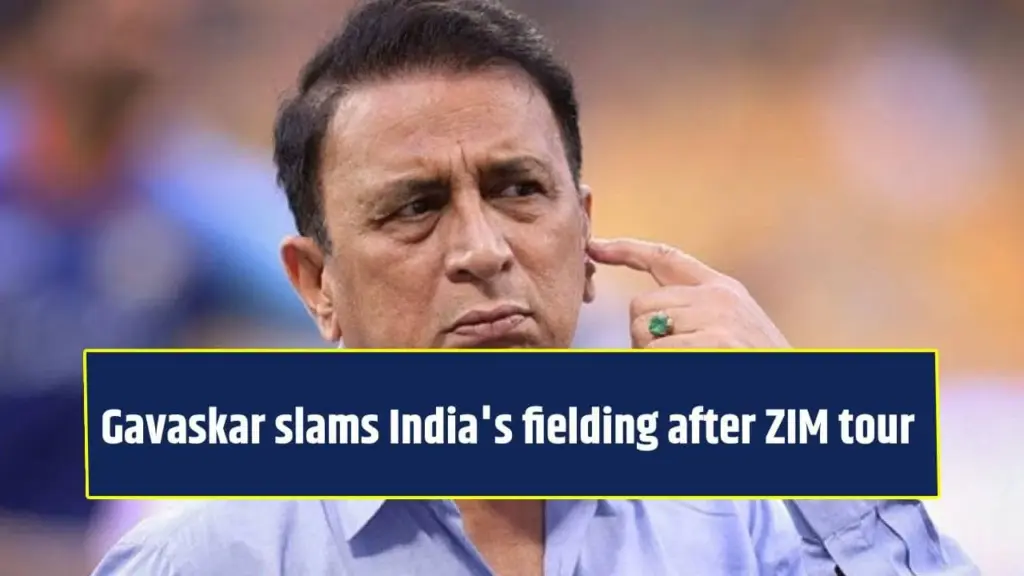
Former India opener Sunil Gavaskar has urged selectors to consider dropping players who are not performing well in the field. He emphasized that good fielding is as crucial as batting and bowling. Gavaskar stated that players consistently making fielding mistakes should not be included in the team, and captains should not have to conceal poor fielders.
Gavaskar also expressed dissatisfaction with India’s batting during the recent white-ball series against England, noting that batters did not always make optimal decisions or play according to the match situation. He suggested that in the ODI format, batters have more time to settle before attempting power shots, advocating for smart cricket and targeting specific bowlers.
Coaching Structure and Future Direction
Questions have also arisen regarding the team’s dressing room atmosphere. Former India opener Virender Sehwag observed that some players appeared to be burdened by the fear of losing their positions, which he believes can impact decision-making under pressure, especially during challenging overseas assignments where confidence is vital.
The debate surrounding the national team’s coaching structure has intensified following the contrasting performances on recent tours. Calls for VVS Laxman to replace Gautam Gambhir as head coach have gained momentum. Laxman’s record when serving in an interim capacity includes guiding India to nine victories in his last 10 T20Is as coach, winning six of seven bilateral series, and leading the country to an Asian Games gold medal. His work at the National Cricket Academy has also fostered strong relationships with emerging cricketers.
Gambhir’s tenure includes successes such as guiding India to the ICC Champions Trophy and the ICC T20 World Cup. However, the team’s slump immediately after the World Cup, including six successive overseas T20I defeats against Ireland and England, has drawn criticism. His record in Test cricket, with only three wins from 11 matches, has also been scrutinized.
The discussion extends to contrasting coaching philosophies. Laxman is seen as calm, approachable, and focused on player development, encouraging young cricketers to play freely. Gambhir is known for his uncompromising standards and intense management style. While this approach may benefit Test cricket, some reports suggest the pressure generated within the dressing room may have contributed to anxiety among younger players during challenging overseas tours.
Despite public support for Laxman, the Board of Control for Cricket in India has reaffirmed its confidence in Gambhir, whose contract extends until the 2027 ODI World Cup. Nevertheless, discussions about a split-coaching model have gained traction within Indian cricket. This model would see Laxman permanently lead the T20I side, focusing on white-ball talent, while Gambhir would concentrate exclusively on Test cricket, where his strategic mindset could be more effective. Supporters of this proposal argue that modern cricket’s different formats require distinct coaching methods.
Source: theshillongtimes.com
 Priya Menon
