Uefa maintains World Cup boycott threat despite Fifa’s backing for Infantino

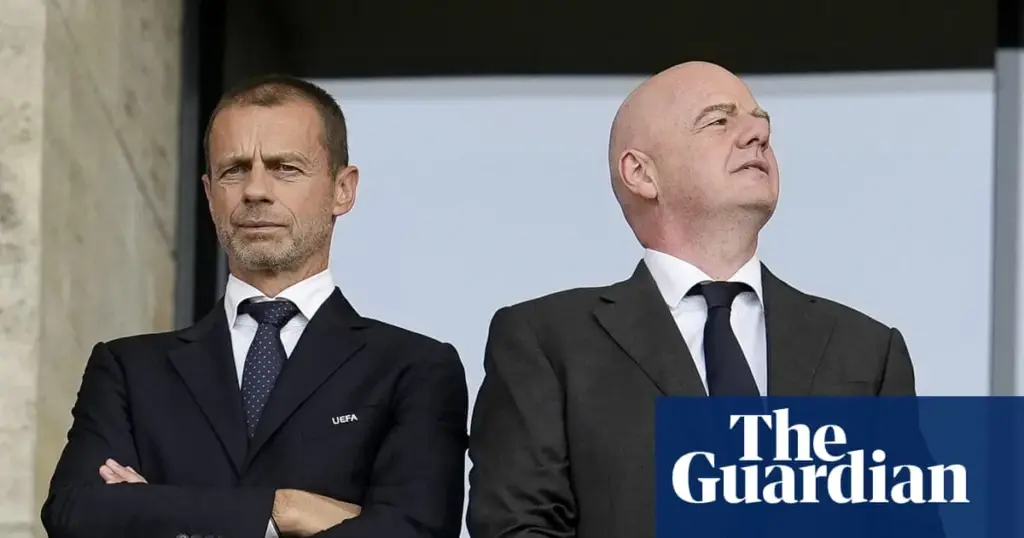
Uefa’s Stance on Infantino’s Presidency
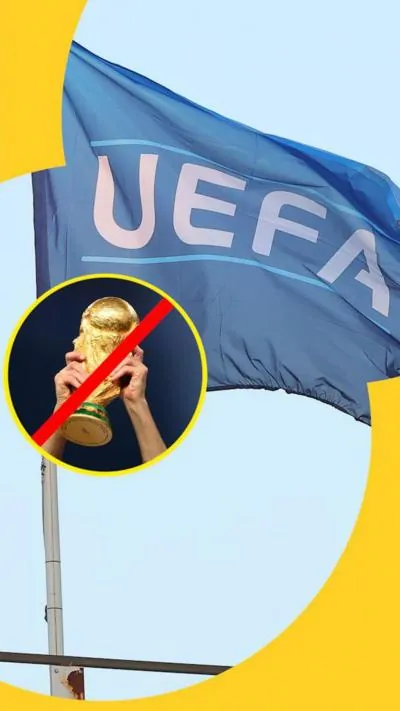
Uefa has reiterated its loss of confidence in Gianni Infantino’s presidency, stating that Fifa’s public backing of its president “changes nothing.” This comes after Uefa had previously threatened to boycott Fifa-run competitions. The European governing body indicated that conditions necessary to avert a boycott have not been met, despite the withdrawal of a plan to sell stakes in the World Cup to private investors.
The conditions set by Uefa included the withdrawal of proposals to sell off major competitions and assurances that such attempts to “disfigure the game” would not be made again. Uefa maintains that these conditions have not been satisfied. The organisation also made clear its position regarding Infantino’s leadership, stating that its lack of confidence in his presidency remains unchanged.
Concerns and Divisions within Football Governance
The situation highlights ongoing turmoil in football governance. The English FA has formally withdrawn its support for Infantino’s re-election. The global players’ union, Fifpro, has condemned what it described as “a profound abuse of presidential power” and called for governance reforms. Fifpro also wrote to Fifa with several demands, including giving players voting rights on the Fifa Council.
The South American confederation, Conmebol, also expressed concern over “repeated unilateral actions taken without resorting to dialogue.” However, Conmebol stated it would not support any action that disregards Fifa’s established institutional mechanisms before the presidential election. In contrast, the Confederation of African Football (Caf) unanimously reconfirmed its support for Infantino.
A meeting of some members of the Fifa management board in Rabat, Morocco, saw Infantino and Secretary General Mattias Grafstrom pictured together. However, several notable individuals were absent from this meeting. Arsène Wenger, Fifa’s chief of global development, reportedly declined an invitation to attend, seeking to distance himself from Infantino. Kevin Lamour, Fifa’s chief operating officer, who had criticised the proposals as “the project of one person,” was not invited to the summit.
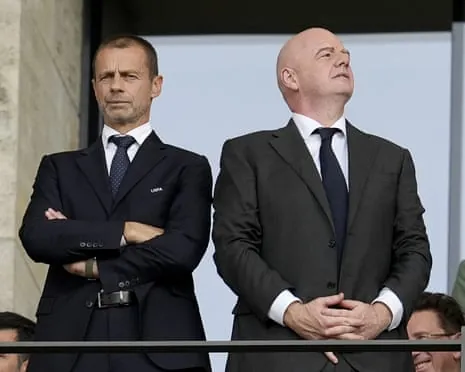
Uefa remains hopeful of exploiting divisions within Fifa’s leadership. The option of a vote of no confidence is still on the table, which Uefa could trigger via an extraordinary congress. However, this would require a majority of Fifa’s 211 member associations to pass the motion. Another option for Uefa is to find a unity candidate to stand against Infantino in the election next March.
Potential Boycott and Future Implications
The threat of a boycott by Uefa remains a significant leverage point. If no agreement is reached, the Fifa Women’s U20s World Cup, scheduled to begin in Poland on 5 September, could be the first tournament affected by a Uefa-led boycott. Six European countries, including England, are expected to participate in this competition.
The Jordan Football Association president, Prince Ali bin al-Hussein, confirmed that Fifa had paid bonuses owed from last December’s Arab Cup. Despite this, Prince Ali stated that he would continue to oppose Infantino’s re-election, clarifying that his association would not endorse or vote for the current Fifa president.
The ongoing situation suggests that Uefa is not content with Fifa’s apologies regarding the handling of the Fifa Forward Enterprise (FFE) proposal. Uefa continues to seek answers to key questions about the proposal, including who was involved, whether there was a competitive tender process, and if Infantino stood to benefit personally.
The Fifa Women’s U20s World Cup is set to kick off in Poland on 5 September.
Source: bbc.com

